
Inside Pettah Market, Colombo: Ground Notes on the India–Sri Lanka Rice & Chilli Trade
This March we travelled to Colombo and did what we believe every serious exporter should do: walked the market. Pettah is the heart of Colombo's — and really Sri Lanka's — commodity trade. Almost every merchant trader in the country, across every commodity, has a presence in these dense streets: grains here, spices there, onions and dry goods a block over. Across the visit we met more than thirty traders and importers — warm, welcoming people who gave a first-time visitor their time and their honest numbers — and the conversations reshaped how we think about one of India's most natural trading partners.


Why Sri Lanka Matters More Than Its Size
On paper, Sri Lanka is a mid-sized market. In practice, it is one of the largest buyers of Indian dried red chillies in the world — a staple of Sri Lankan cuisine that the island overwhelmingly imports rather than grows at scale. Add onions, rice (in specific windows — more on that below), pulses and spices, and India is woven into the daily Sri Lankan kitchen. Proximity is the quiet superpower: a container from South Indian ports reaches Colombo in days, not weeks, which means fresher stock, faster cycles and lower freight than any competing origin.
The ₹1,000-Crore Corridor: Onions and Chillies
Pettah's traders were generous with their numbers, and two commodities tower over everything else. By the estimates we heard on the ground, this market's network imports roughly ₹400 crore of onions and ₹600 crore of red chillies from India — a corridor of around a thousand crore rupees in just two commodities, flowing through a few streets to feed a nation of more than two crore people. Standing in an onion store with sacks stacked to the ceiling, you understand: this is not a niche trade, it is national food infrastructure.
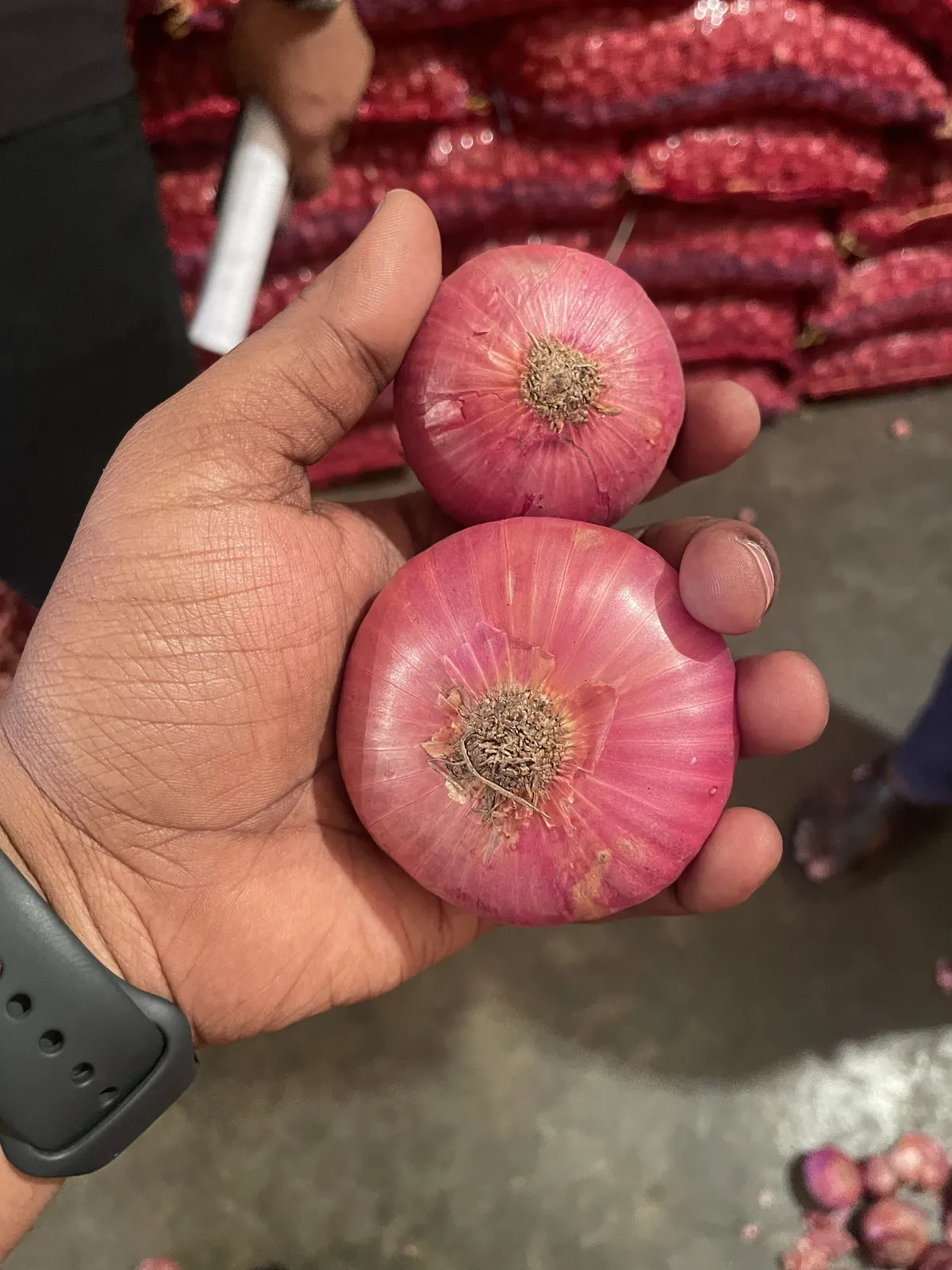
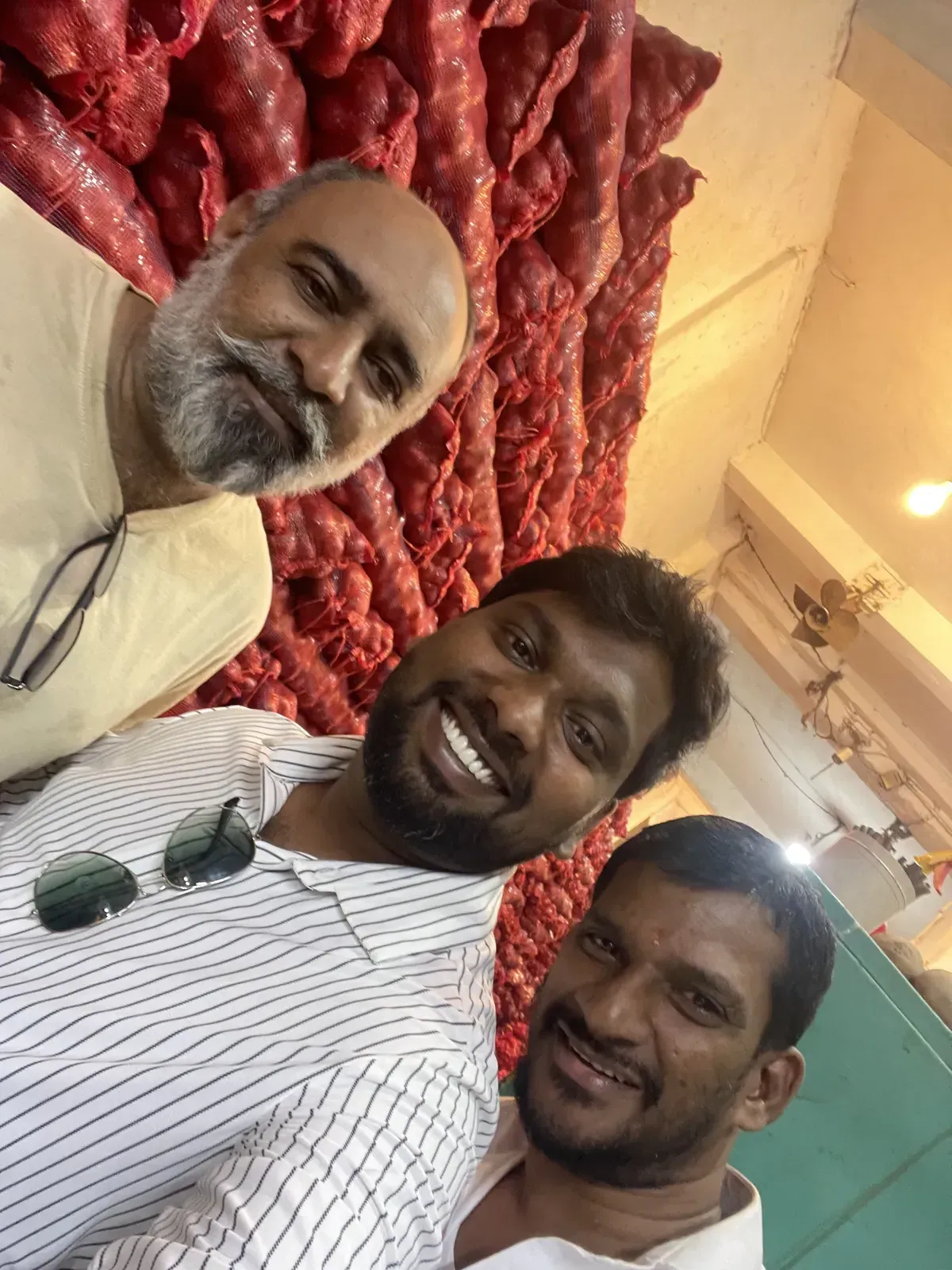
That second photo says something the statistics cannot. In one Pettah onion store we stood with a Pakistani trader and a Sri Lankan merchant — three nationalities in one doorway, all moving the same commodity through the same market. Trade routes compete; traders, in our experience, mostly cooperate.
What Thirty Trader Conversations Taught Us
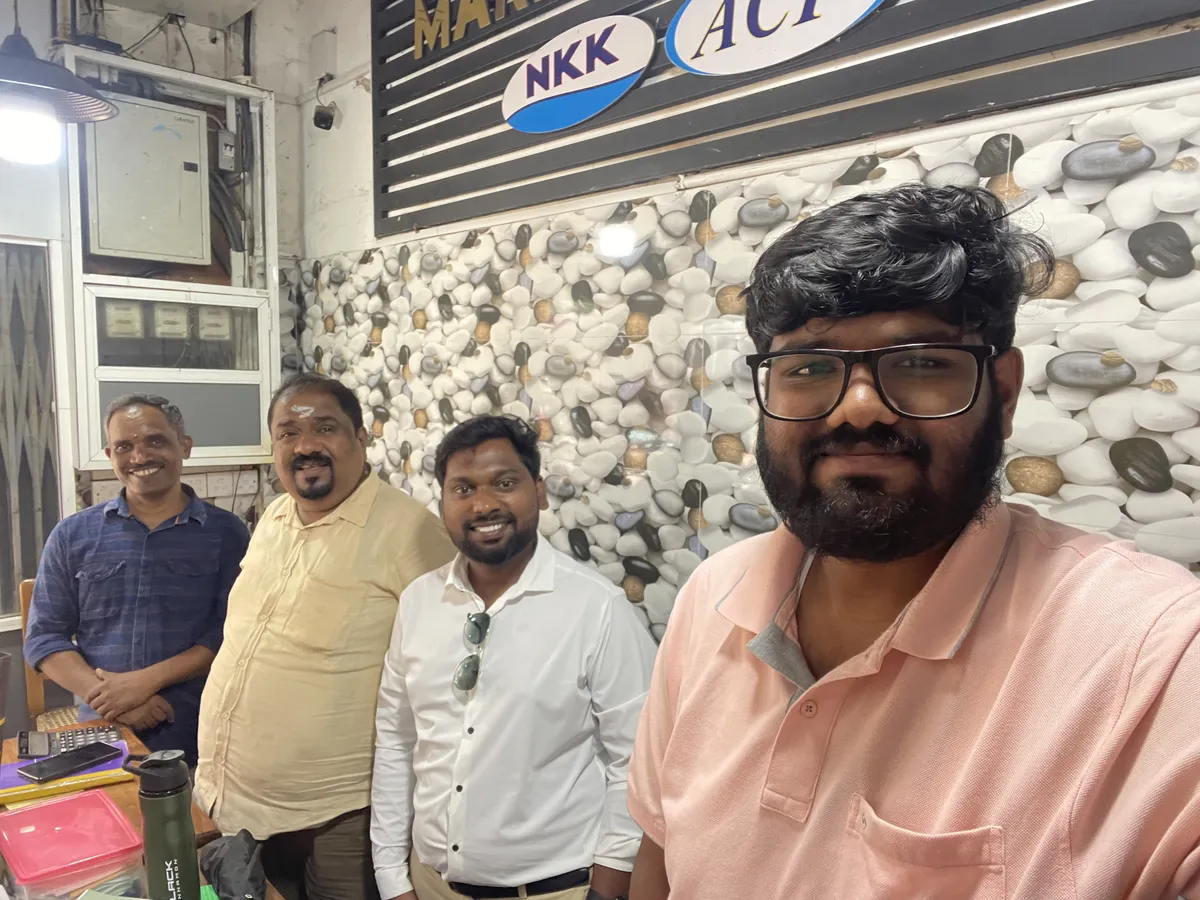
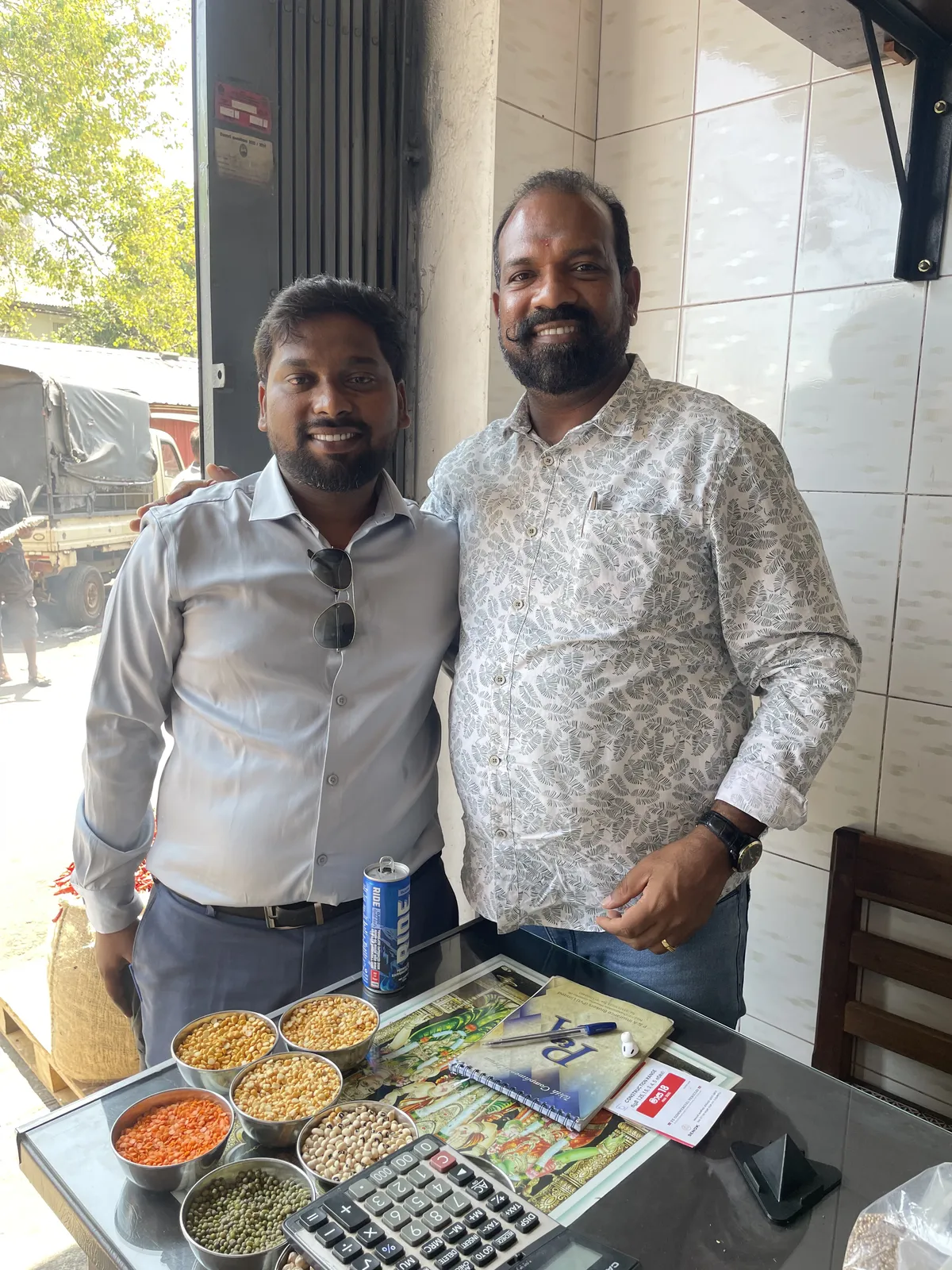
The welcome was warmer than any trade fair — shop after shop poured tea, opened sample tins and talked numbers openly. And the same lessons kept repeating:
- The license window rhythm. Rice imports into Sri Lanka move in bursts: when domestic harvests fall short, the government opens import licenses — and the buyers who win are those whose suppliers can load immediately. Relationships built in the quiet months decide who gets called on day one of a window.
- Trust networks over tenders. Pettah runs on long-standing relationships and word of honour. A new supplier is not tested with a contract; they are tested with a small lot, watched closely, and then — if the lot lands as promised — the orders grow. Consistency is the only marketing that works there.
- Chilli quality is read by eye and hand. Colombo's traders judge colour, wrinkle, stem-cut and moisture in seconds, physically. Specifications matter, but the sample bag decides. Our Teja S17 and Sannam S4 from the Guntur–Warangal belt speak exactly this language.
- Currency and payment pragmatism. Traders think hard about exchange exposure and payment structure. Suppliers who can work flexibly within proper banking channels — clean LC practice, sensible terms — remove a real source of friction.
- Duty and customs clearance are the exporter's biggest hurdle. Every trader we met said the same thing: the hard part of the India–Sri Lanka corridor is not demand, it is the border — duty structures and customs clearance that can stall a consignment. The suppliers who thrive are those whose documentation is flawless before the vessel sails, so clearance friction stays at a minimum.
The Hand Pullers of Pettah
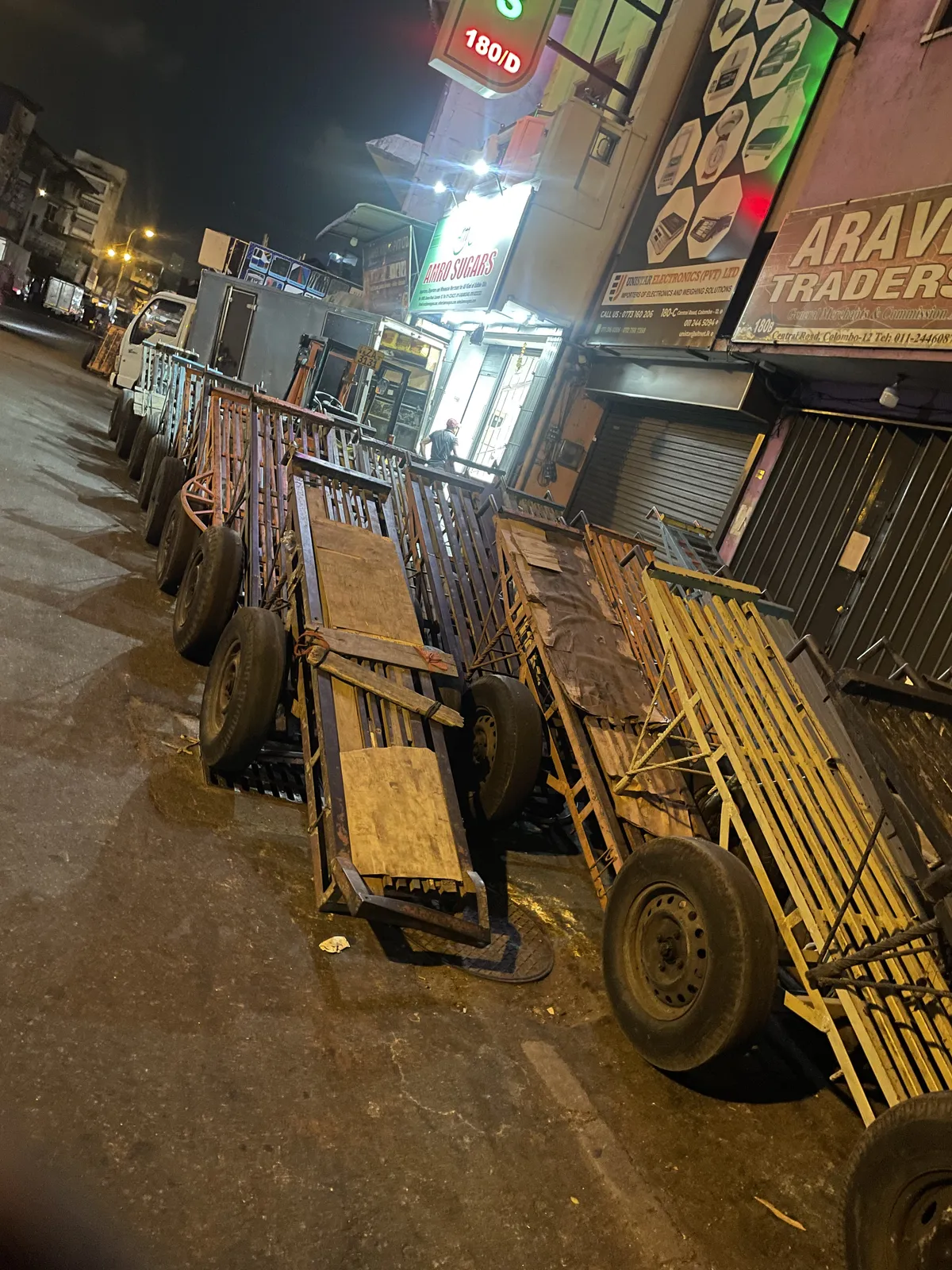
One group deserves a mention of their own. Pettah has no conveyor belts and no forklifts in its lanes — it has hand pullers: men who move tonnes of onions, chillies, rice and spices through the market's narrow streets on wooden hand carts, load after load, from before dawn until the shutters come down. Their hard work is the reason the market functions at all — every sack that reaches a shop shelf in Colombo, and onward to every corner of the country, has passed over a hand puller's cart. No account of Pettah is honest without them.
The India–Sri Lanka Advantage, Done Right
Ground reality confirmed what the trade statistics hint at: this is a corridor where speed, trust and product knowledge beat scale. A supplier three days away who answers the phone, ships true-to-sample chillies and stands ready when a rice license window opens is worth more to a Pettah wholesaler than a distant giant with a catalogue.
That is the supplier we are building Govindu Brothers to be — for Sri Lanka and for every market we serve. We now count dozens of Colombo trade contacts among our network, and our whole chillies, chilli powder and parboiled rice programs are structured for exactly the rhythm Pettah taught us.
Importing into Colombo? Send us an enquiry — we will respond with samples, not slogans.